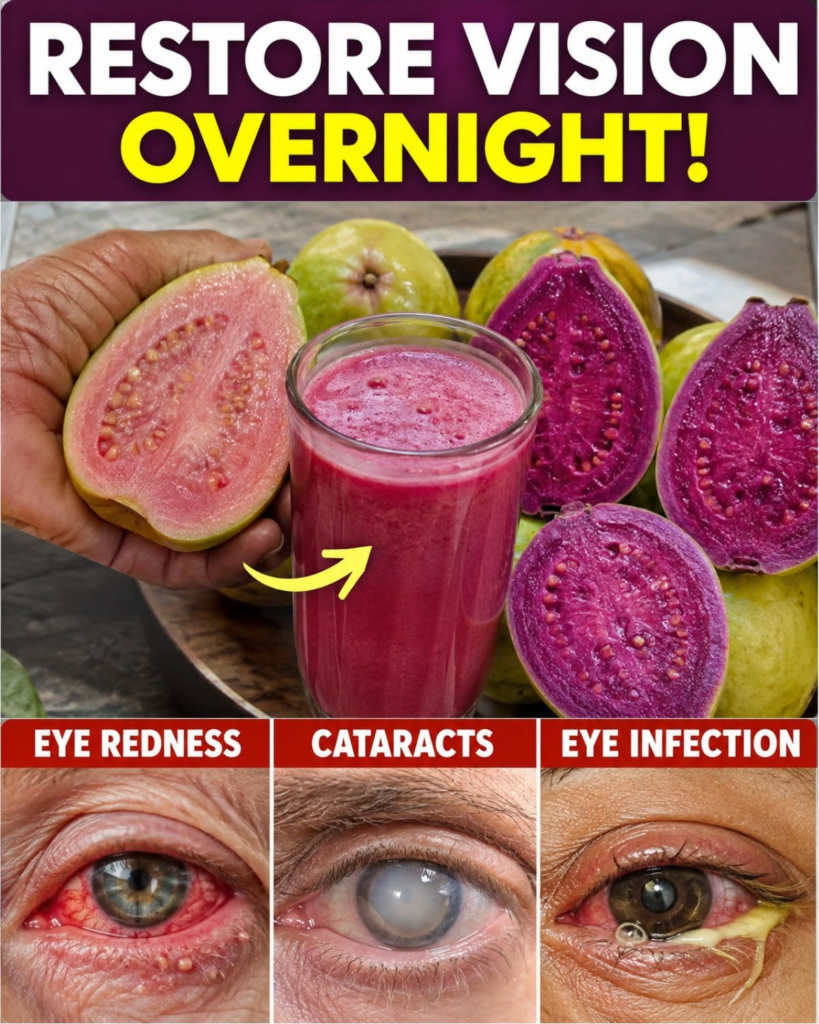
Guava does not “cure” cataracts like the post screams — it attacks the oxidative grind that makes the lens go cloudy in the first place. That pink, fragrant fruit is loaded with vitamin C and protective plant pigments that hit the exact biology cataracts feed on: protein clumping, light scattering, and the slow frosting of a once-clear lens.
And that matters because cataracts do not announce themselves with a siren. They creep in like a window filmed over by years of kitchen grease, turning headlights into starbursts, street signs into smears, and bright daylight into a washed-out glare that feels hostile.
By the time many people notice it, they are already squinting at menus, tilting their head to find the “good” angle, and avoiding night driving because every oncoming light blooms into a white burst. The frustration is not just blurry vision — it is the creeping loss of confidence that comes with not trusting your own eyes.
The blame gets dumped on age, as if the lens just gives up out of nowhere. What’s really happening is more brutal: the eye is being hammered by oxidative stress, and the body is running short on the raw biological fuel it uses to keep that damage from hardening into cloudiness.
That is where guava changes the story.
The lens is not failing quietly — it is being sandblasted
Think of the lens like a crystal-clear windshield that never gets washed. Every day, sunlight, smoke, blood sugar swings, and environmental wear leave a microscopic film behind, and that film thickens until clarity starts to die.
Guava brings in what you can call a Lens Shield Surge: a concentrated hit of molecular brooms that help neutralize the oxidative pressure beating on lens proteins. Vitamin C is the obvious player, but the real power is in how the fruit helps calm the chemical chaos that keeps the clouding process alive.
When that pressure stays high, proteins in the lens start sticking together like wet flour dumped into a pan. Light no longer passes through cleanly; it scatters, bounces, and blooms, and suddenly the world looks like it’s been covered with a thin layer of frost.
Cut open a ripe guava and you get that sharp tropical smell, the soft grainy flesh, the pink center packed with protective chemistry. It looks like food, but inside the body it behaves more like a cleanup crew arriving before the mess hardens into something permanent.
The ugly contrast is simple: without enough of these protective compounds, the lens keeps absorbing stress like a sponge soaked in dirty water. With them, the eye has more ammunition to push back against the daily wear that keeps cataracts moving forward.
And that is why nobody built a billboard around this. Wall Street does not build empires around fruit bowls, and the supplement machine hates anything that grows in plain sight for pennies.
What happens next is the part people feel in ordinary life, not in medical jargon.
Why the blur shows up in the moments that matter
The first thing people notice is not a dramatic blackout. It is the little betrayals: halos around streetlights, glare off wet pavement, a bathroom mirror that looks hazy even when it’s clean.
Then the day starts getting smaller. You stop reading in dim rooms, you catch yourself blinking harder at the TV, and you begin to mistrust brightness itself because it feels like it’s attacking you instead of illuminating anything.
Guava helps by feeding the body cellular ammunition that supports the eye’s defenses against oxidative wear. That matters because the lens is not isolated — it is downstream from the whole-body storm of blood sugar swings, smoke exposure, UV damage, and chronic stress.
Think of the eye like a camera sitting in a dusty workshop. If the air stays dirty, every lens you put in that room gets coated; clean one corner and you still have a problem, but reduce the dust and the whole system starts working like it was meant to.
After a few days of consistency, the shift shows up in the small things: less glare when you step outside, less strain when you read, less of that “everything looks washed out” feeling that makes a normal afternoon feel oddly exhausting.
That is the relief most people never get told about. Not a fantasy cure — a real reduction in the pressure that keeps the lens under siege.
Why men and women feel the damage in different ways
For men, the warning often shows up when driving becomes a fight. Headlights flare, road signs blur at the edges, and the confidence that used to come from sharp distance vision starts leaking out of the picture.
For women, the frustration often lands in closer work first: sewing, reading labels, makeup, cooking, or trying to see faces clearly in a dim room. The eye feels tired faster, as if the lens is asking for a break it never gets.
Guava helps by quieting the internal rusting process that keeps the lens clouding over. It is not magic; it is maintenance — the kind of maintenance a machine needs before the gears grind themselves into dust.
Picture a morning where you pour coffee, look out the window, and the world outside is not wearing that gray film anymore. The light still exists, but it stops feeling like a punishment.
That difference is huge because cataracts do not just blur vision. They shrink freedom, one avoided errand, one missed drive, one squinting session at a time.
Guava gives the body a cleaner supply of protective compounds so the lens is not left naked against the daily assault. The effect is subtle at first, then obvious in the places that used to feel like a fight.
And yes, that is exactly why the cheapest fix gets the least airtime. Nobody wants to sell a fruit when they can sell a bottle, a bundle, or a miracle promise wrapped in a subscription.
The real story is not that guava performs a stunt. It is that it helps the body keep the lens from turning into frosted glass.
The P.S. that changes the whole game
Boiling guava into syrup, turning it into jam, or drowning it in sugar wipes out a big slice of what makes it useful. Heat, storage, and sweetened processing can crush the very compounds you wanted in the first place.
Fresh, ripe, eaten as-is — that is where the fruit keeps its edge. And the next layer matters even more: the right pairing can change how strongly the eye’s defenses respond.
This article is for informational purposes only and does not replace professional medical advice. Please consult your healthcare provider for personalized guidance.