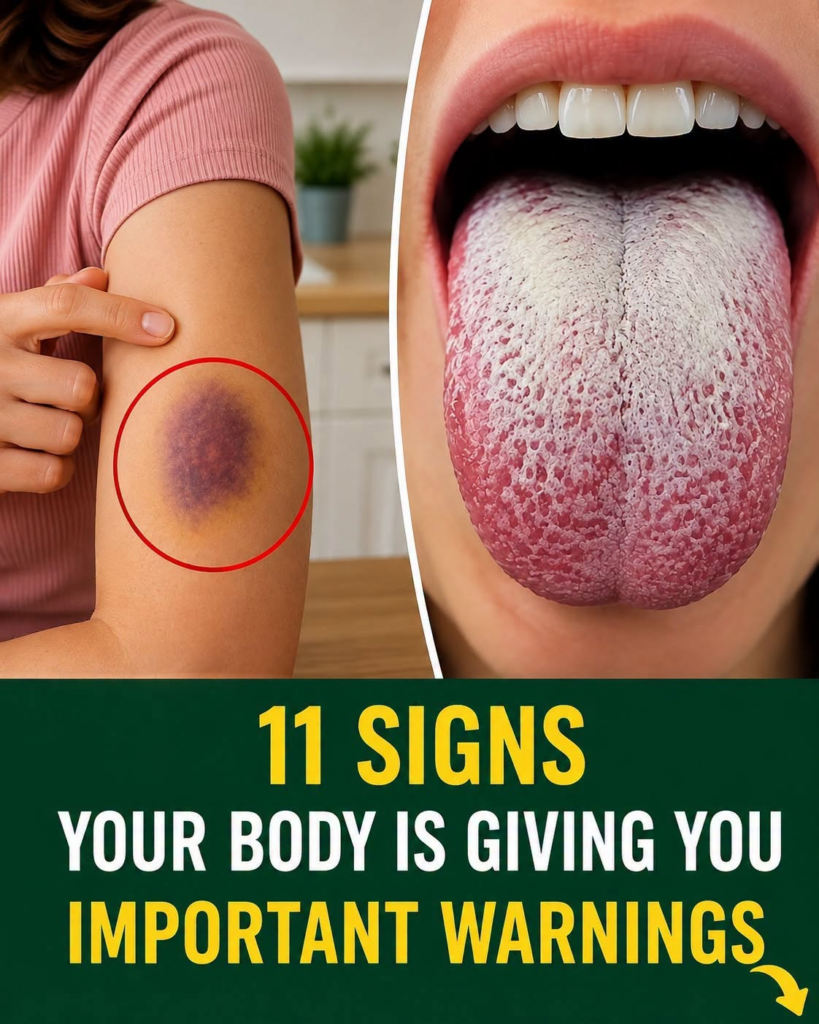
Your body is constantly communicating with you—often through small, subtle changes that are easy to overlook during a busy day. A bruise that seems to appear out of nowhere, a white coating on your tongue when brushing your teeth, or nails that suddenly look pale or develop unusual ridges may all catch your attention.
Most of the time, these changes are harmless or temporary. However, when they persist, recur, or appear alongside other symptoms, they may be your body’s way of encouraging you to pay closer attention to your overall health.
Learning to recognize these common signs doesn’t mean jumping to conclusions. Instead, it can help you make healthier lifestyle choices and know when it’s worth discussing a concern with a healthcare professional.
One simple daily habit at the end of this article may also help you notice these changes earlier and become more aware of your overall well-being.
Why Paying Attention to Your Body Matters
Your body works around the clock to maintain balance. When something changes—whether it’s related to nutrition, hydration, sleep, stress, or an underlying health condition—it may show subtle clues before more noticeable symptoms appear.
Medical organizations such as the Mayo Clinic and Cleveland Clinic encourage people to become familiar with their normal appearance and habits so they can recognize meaningful changes early.
Here are eleven common signs worth knowing about.
1. Unexplained Bruising
Occasional bruises happen to almost everyone, especially after minor bumps you may not even remember.
However, bruises that:
- appear frequently
- become unusually large
- develop without any clear injury
- take a long time to heal
may deserve medical attention.
Possible contributing factors include:
- aging skin
- certain medications
- vitamin deficiencies
- blood clotting disorders
While an occasional bruise is rarely a cause for concern, recurring unexplained bruising should be evaluated by a healthcare provider.
2. A Persistent White Coating on the Tongue
A thin white coating can be completely normal, especially first thing in the morning.
However, a thicker coating that doesn’t improve with brushing may be associated with:
- dry mouth
- poor oral hygiene
- yeast overgrowth (oral thrush)
- smoking
- certain medications
Good oral hygiene, staying hydrated, and regular dental checkups can often help maintain a healthy tongue.
3. Pale or Ridged Fingernails
Healthy nails are typically smooth and pink.
Changes such as:
- unusual paleness
- deep ridges
- brittleness
- spoon-shaped nails
may sometimes reflect nutritional deficiencies or other medical conditions.
Although nail changes alone rarely confirm a diagnosis, persistent changes are worth discussing during your next medical appointment.
4. Constant Fatigue
Feeling tired after a long day is normal.
Fatigue that continues despite adequate sleep may sometimes be linked to:
- poor sleep quality
- iron deficiency
- thyroid disorders
- stress
- chronic medical conditions
If your energy remains low for several weeks, a medical evaluation may help identify the cause.
5. Swollen Feet or Ankles
Mild swelling after standing or traveling is common.
Persistent swelling may be associated with:
- prolonged sitting
- certain medications
- circulation problems
- kidney, liver, or heart conditions
Elevating your legs, staying active, and limiting excess sodium may help in some cases, but ongoing swelling should be assessed by a healthcare professional.
6. Dry, Cracked Skin
Dry skin often develops during cold weather or after frequent handwashing.
When severe or persistent, it may also relate to:
- dehydration
- eczema
- nutritional deficiencies
- thyroid conditions
Using moisturizer and drinking enough water may help support healthy skin.
7. Frequent Muscle Cramps
Occasional cramps are common after exercise.
Repeated muscle cramps may sometimes be linked to:
- dehydration
- electrolyte imbalance
- overuse
- certain medications
Adequate hydration and a balanced diet often help reduce the risk.
8. Changes in Bowel Habits
Temporary digestive changes are usually not serious.
However, persistent constipation, diarrhea, blood in the stool, or ongoing abdominal discomfort should always be discussed with a healthcare provider.
9. Increased Thirst or Frequent Urination
Feeling thirsty after exercise is perfectly normal.
If excessive thirst and frequent urination continue for several days, they may warrant medical evaluation, as they can sometimes be associated with conditions such as diabetes.
10. Persistent Bad Breath
Bad breath isn’t always caused by food.
It may also relate to:
- gum disease
- dry mouth
- sinus problems
- digestive conditions
Regular dental care is one of the best ways to reduce the risk.
11. Skin Changes That Don’t Heal
A mole, sore, or patch of skin that:
- changes shape
- changes color
- grows larger
- bleeds
- doesn’t heal
should always be evaluated by a healthcare professional.
Early assessment can be very important.
A Simple Daily Habit That Can Help
One of the easiest ways to become more aware of your health is to spend one minute each morning doing a quick self-check.
Take a moment to notice:
- your skin
- your tongue
- your nails
- your eyes
- any unusual swelling or bruising
This brief routine isn’t meant to diagnose disease—it simply helps you become familiar with what’s normal for your body so you’ll be more likely to notice meaningful changes.
Healthy Habits That Support Overall Wellness
Simple daily practices can help support your general health:
- Eat a balanced diet rich in fruits, vegetables, lean protein, and whole grains.
- Stay well hydrated throughout the day.
- Exercise regularly according to your fitness level.
- Get 7–9 hours of quality sleep each night.
- Avoid smoking and limit alcohol intake.
- Brush and floss daily while keeping up with routine dental visits.
- Schedule regular medical checkups and recommended health screenings.
When to See a Healthcare Professional
Seek medical advice if you notice symptoms that:
- persist for several weeks
- become progressively worse
- occur suddenly without explanation
- interfere with your daily activities
- are accompanied by fever, unexplained weight loss, severe pain, or bleeding
Early evaluation often makes it easier to identify the cause and begin appropriate treatment if needed.
Final Thoughts
Your body communicates through small changes every day. While many of these signs are harmless and temporary, paying attention to persistent or unusual changes can help you make informed decisions about your health.
Rather than relying on a single symptom, focus on overall patterns, maintain healthy habits, and seek professional medical advice whenever something doesn’t feel right. Staying observant—and proactive—is one of the simplest ways to support your long-term well-being.